Plumbing inspection camera for your phone
Most plumbing problems at home are within arm's reach: a slow sink, a drip inside the wall behind the shower, a damp patch under the cabinet. A waterproof camera on a 1 m cable shows you what's going on before you take anything apart.
For the first meter of a drain, a sink trap, the space behind a toilet or a wall cavity around a pipe, a phone inspection camera with a waterproof tip is enough. Reach 360's tip steers around bends; Reach Duo's side camera reads pipe walls and joints. Both have 1 m (3.3 ft) cables, so they're not sewer cameras — for a main line, call a plumber with a sewer scope.
Jobs it's good for
- Slow sinks and tubs. Look down the drain to see whether it's a hair clog near the top or something further down.
- Under the sink. Check the back of the cabinet, the shut-off valves and the joints behind the trap without emptying everything out.
- Inside the wall behind a shower or toilet. Through a small hole — or the gap behind a cover plate — look for a dripping joint, wet insulation or a stained stud.
- Under floors and behind appliances. Through an access hatch or a vent, follow a pipe to where it's wet.
- Vents and ducts. Look inside a dryer vent, an air duct or a bathroom fan outlet for blockages and debris.
Which scope for which job
| Reach 360 | Reach Duo | |
|---|---|---|
| How it sees around corners | Tip bends up to 180° each way | Second camera on the side of the tip |
| Best plumbing job | Inside wall cavities and under floors, where the leak is above or below the hole | Inside pipes and drains, reading the pipe wall, a joint or a thread |
| Waterproof | IP67 camera tip | IP67 |
| Cable | 1 m (3.3 ft), semi-rigid | 1 m (3.3 ft), semi-rigid |
| Phones | USB-C iPhone and Android | Lightning and USB-C iPhones (Lightning adapter included) and Android |
More detail: dual-lens vs articulating endoscope.
What it can't do
- It isn't a sewer camera. A 1 m cable reaches the first part of a drain, not the main line under the yard. For root intrusion, a collapsed pipe or a blockage far down the line, call a plumber with a sewer scope.
- It doesn't clear clogs. It shows you what and where the blockage is, so you know whether a drain snake or a plumber is the next step.
- It doesn't push through several tight bends. Both cables hold the shape you give them; they don't snake through a run of elbows like a plumber's cable.
How to check a slow drain
- Clear the opening. Take out the stopper or the strainer.
- Wipe the tip and connect the camera before you start feeding the cable.
- Feed it in slowly with the picture on the screen. Water and soap on the lens blur the view; pull back and wipe it if they do.
- Stop at any resistance. Don't push the cable through a bend it doesn't want to take.
- Clean it afterward. Wash the cable and wipe the tip with a disinfectant wipe, and let it dry before you put it away.
What you see, and what to do next
| What you see | Next step |
|---|---|
| Hair or soap scum near the top of the drain | Clear it with a drain snake, or take off and clean the trap |
| Something that shouldn't be there, such as a toy or a cap | Take off the trap if you can reach it from there; otherwise call a plumber |
| A dripping joint or wet insulation inside a wall | Turn off the water to that fixture, take a screenshot and call a plumber |
| A cracked or corroded pipe | Take a screenshot and call a plumber |
| Nothing in the first 3 ft (1 m), but the drain is still slow | The blockage is further down, so it's a job for a plumber's sewer camera |
Find the spot first, then look inside
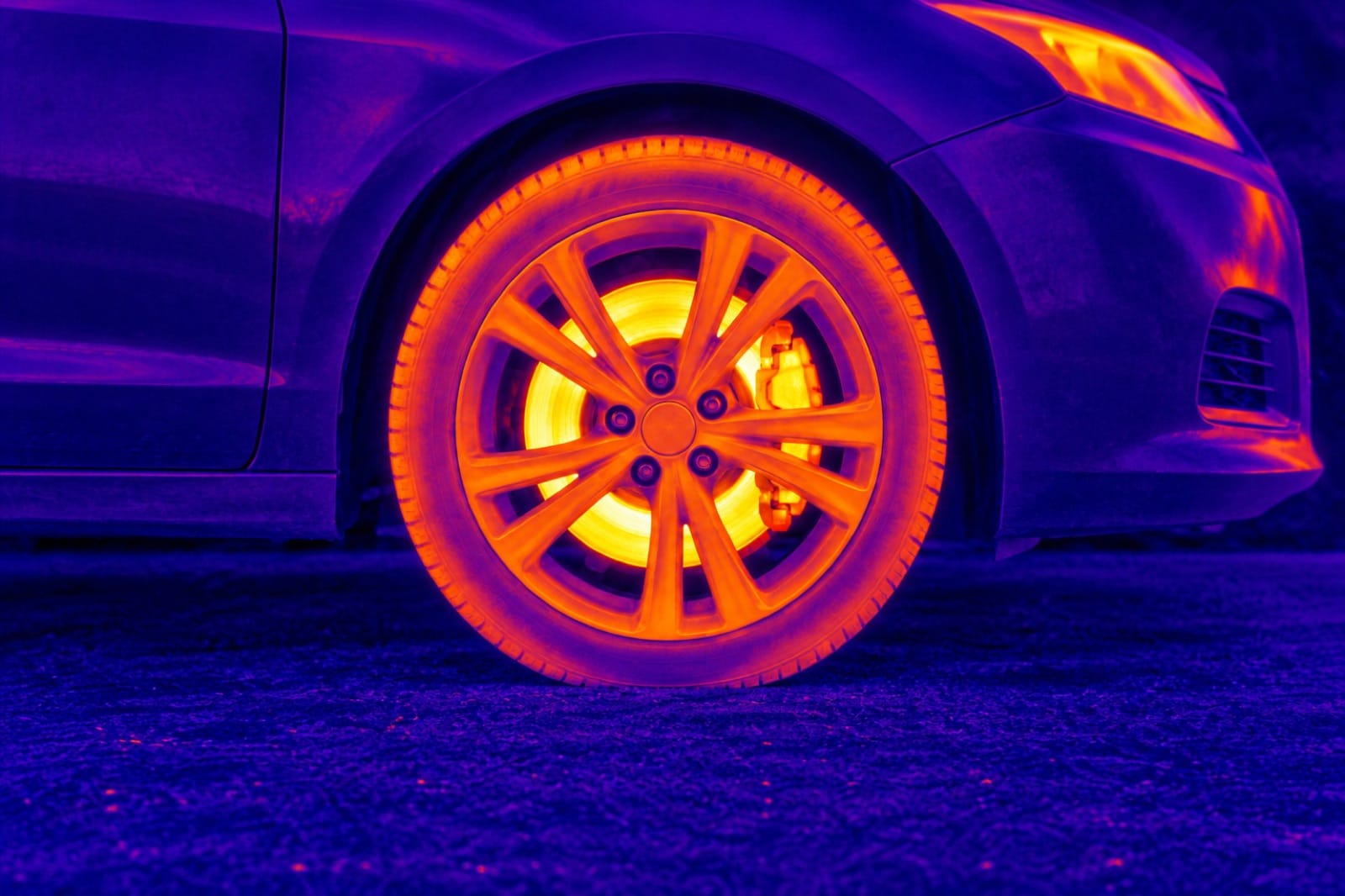
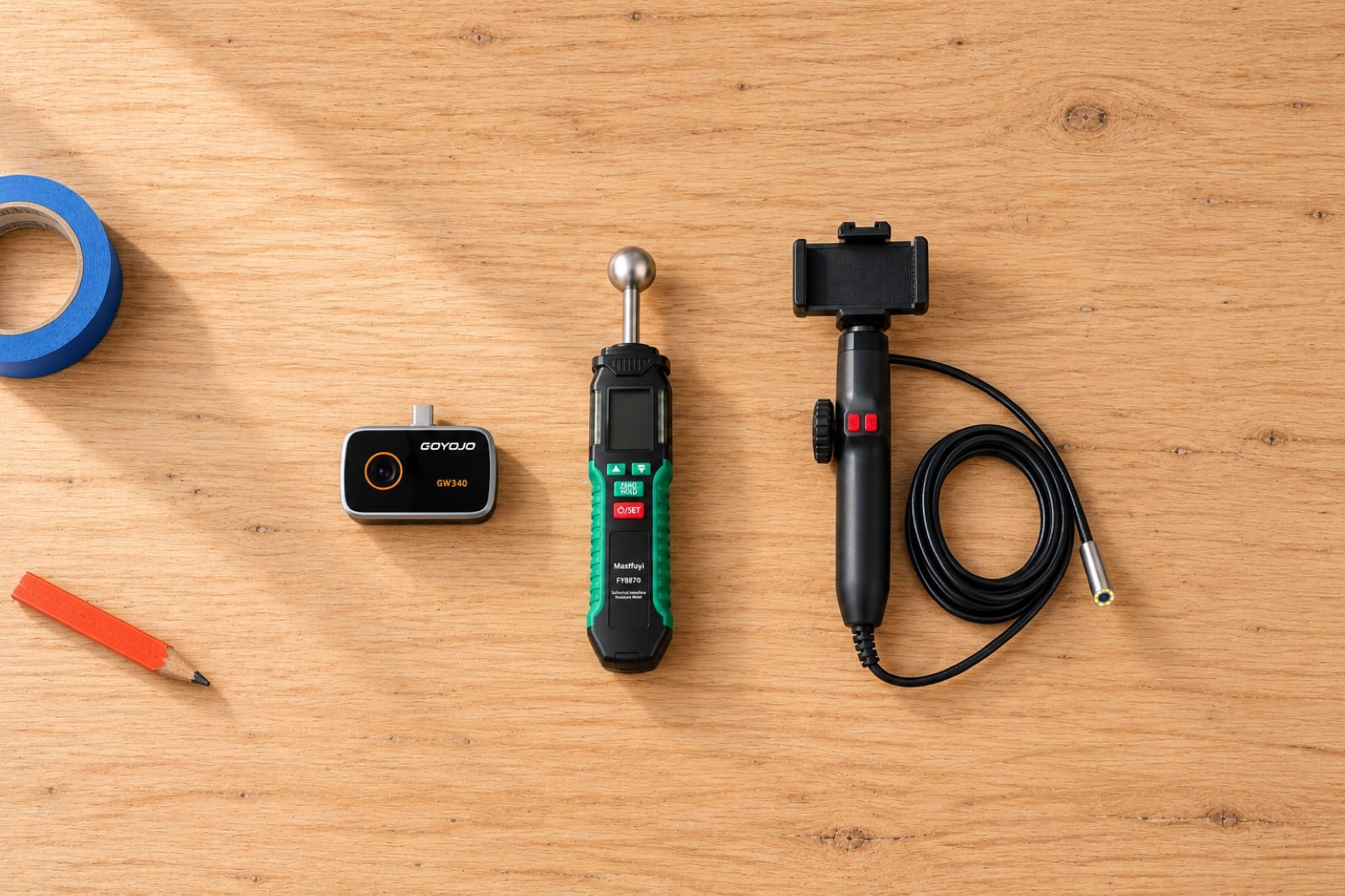
Before you cut a hole, narrow it down from the outside. A thermal camera shows a wet patch as a cooler area and a hot-water pipe as a warm line; a pinless moisture meter confirms the wall is wet. Then one small hole is enough for the scope — see how to find a water leak behind a wall. For a wet wall behind the bathroom, see how to check a shower leak. Only need a camera for one job? Here's when renting makes sense.