DIY home inspection: check the whole house in one weekend
Most houses get checked one problem at a time: a stain appears, an outlet smells hot, one bedroom is unbearable every summer afternoon. By then the problem has usually been growing for a while. A DIY home inspection turns that around: one weekend with the right three tools lets you go through the whole house and catch the small things while they're still small.
Short answer: A DIY home inspection is a room-by-room check you can do yourself in a weekend: wet areas, outlets and the electrical panel, insulation and air leaks, the water heater, outside walls and the attic. A thermal camera finds the spot, a moisture meter confirms damp, and an inspection camera looks inside.
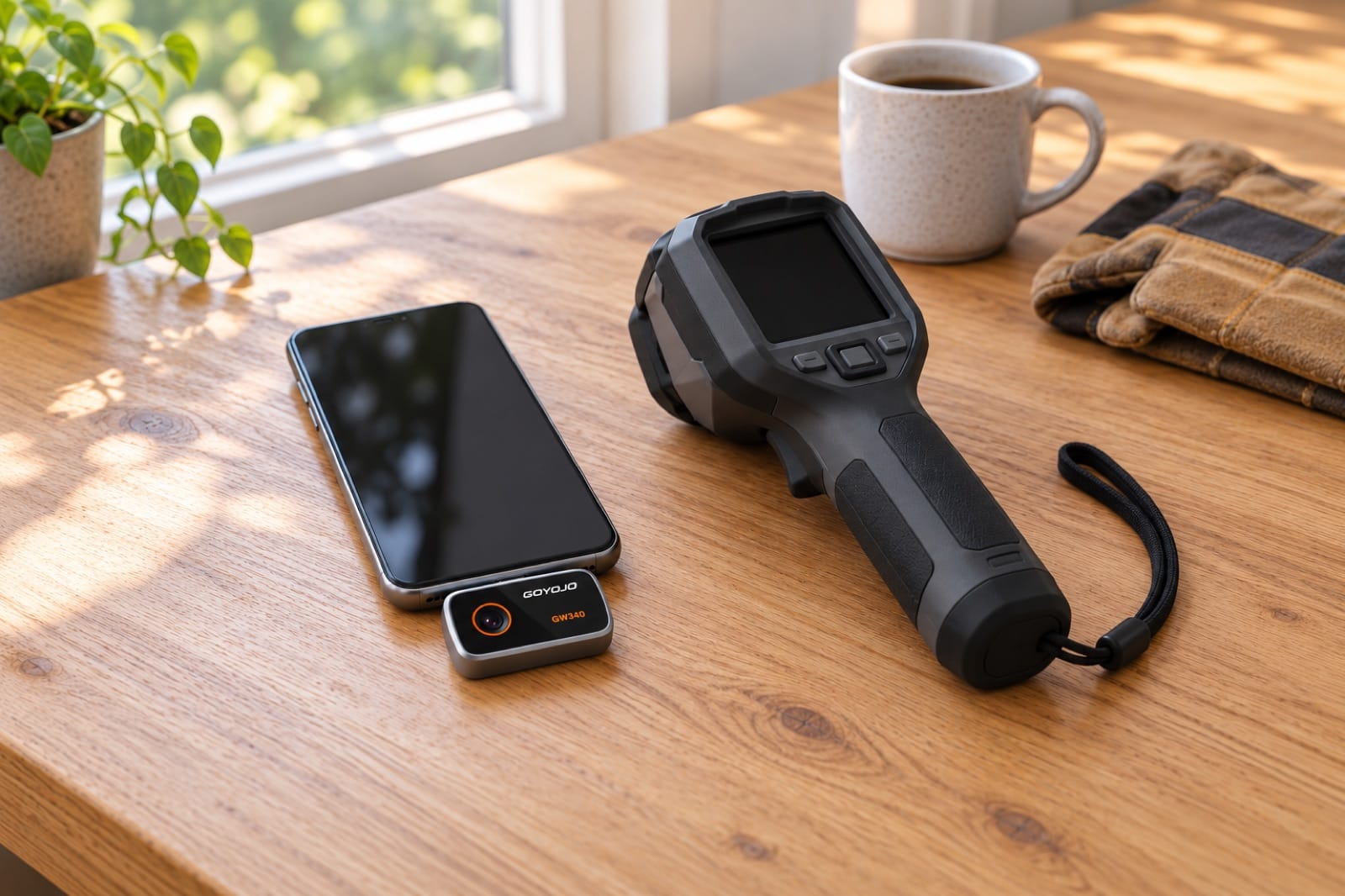
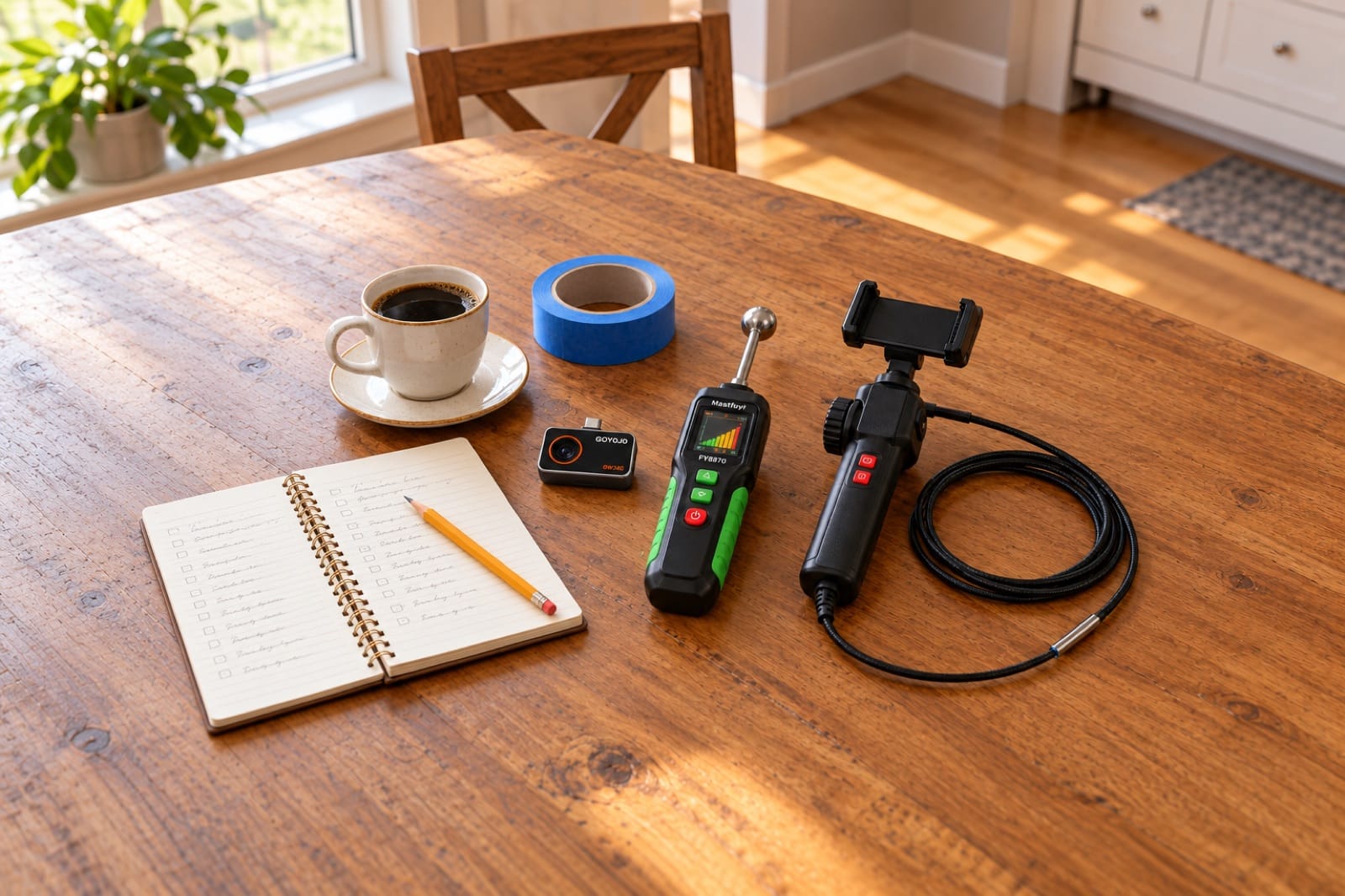
This is the plan we'd follow with the Whole Home Kit: Spark Pro to find what's warmer or cooler than it should be, Damp to check whether it's wet, and Reach 360 to look inside without opening anything up.
What should a DIY home inspection checklist include?
A useful whole house inspection checklist goes by area, not by appliance, so you don't walk past the same wall five times. Here's the weekend at a glance; the sections below explain each step.
| When | Where | What you're looking for |
|---|---|---|
| Saturday morning | Bathrooms, laundry room, kitchen | Leaks, damp patches, swollen cabinets |
| Saturday midday | Outlets, power strips, electrical panel | Anything warmer than its neighbors |
| Saturday afternoon | Ceilings, windows, doors, AC | Missing insulation, air leaks, uneven cooling |
| Sunday morning | Water heater, outside walls, roof, attic | Drips, damp at ground level, wet wood |
| Sunday midday | Under and behind things | Hidden drips, what's behind a gap |
Checking a house you're about to buy or rent? Use our home inspection checklist before you buy or rent and the 20-minute thermal check at an open house instead.
Friday evening: get ready (20 minutes)
- Plug Spark Pro into your phone and open the free THG Start app once, so you're not setting it up on Saturday morning.
- Put two AAA batteries in Damp. They're not in the box.
- Charge your phone fully. Both cameras run from it.
- Gather painter's tape, a marker, a notebook, a headlamp and a step ladder. Tape marks what you find; the notebook becomes your list.
- Check the forecast. A hot or cold day beats a mild one: the Saturday afternoon checks need a clear temperature difference between inside and outside.
Saturday morning: bathrooms, laundry room and kitchen (1.5 hours)
Do the wet areas first, while the sun hasn't warmed the walls.
- Run the hot water and the shower for a few minutes. Hot pipes inside the walls light up on the thermal camera, and so does a warm patch where one leaks.
- Scan the walls around showers and baths, behind toilets and on the other side of the shower wall. A soft, blotchy cool patch is the classic sign of damp.
- Open every sink cabinet. Scan the flexible hoses and the waste pipe, then press the ball of Damp against the cabinet floor and the back panel, especially under the faucets. Particleboard that has been getting wet swells and reads high.
- Check the floor and the baseboards in front of the dishwasher, the fridge and the washing machine.
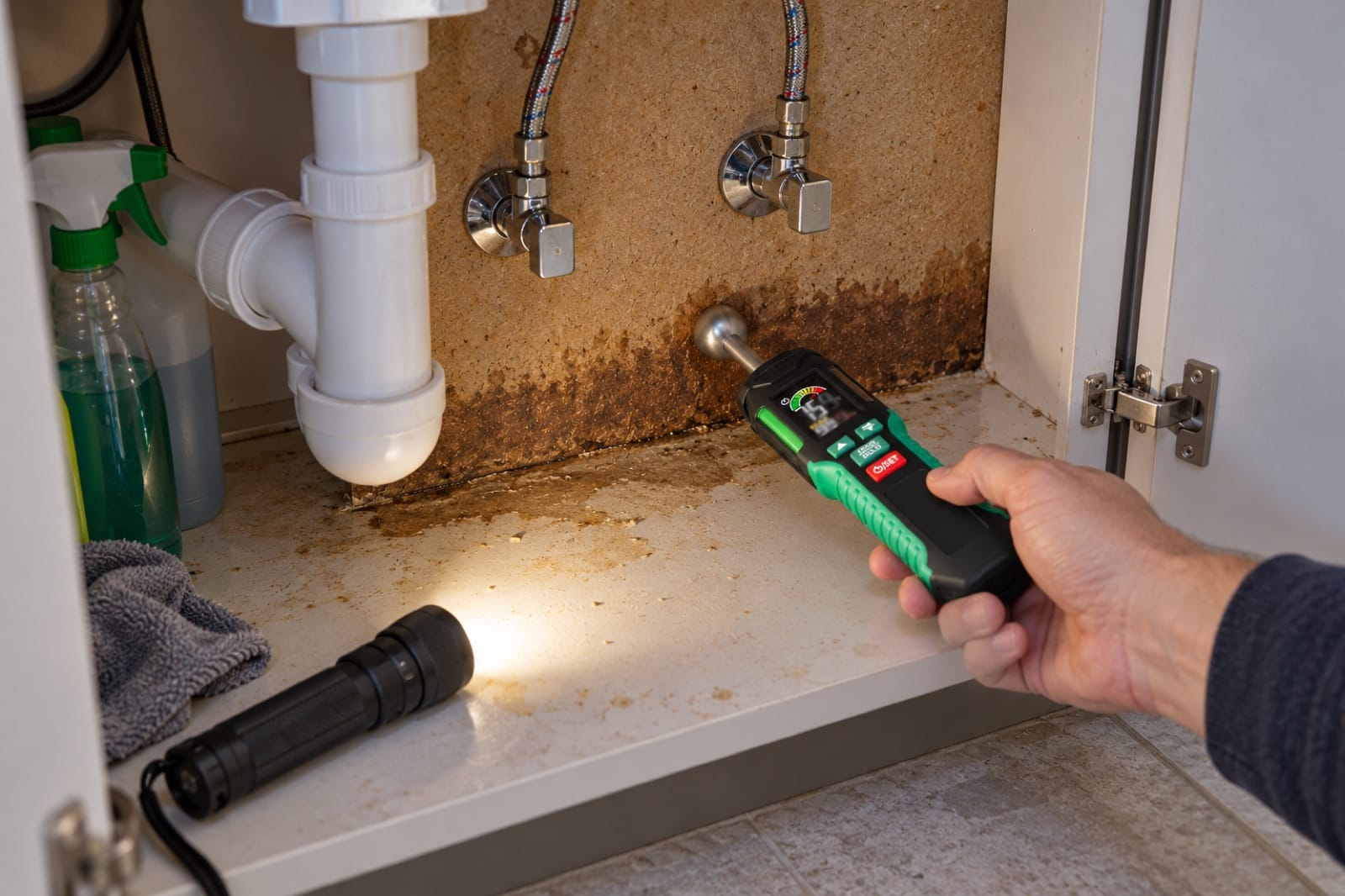
Illustration: a dark, swollen band at the back of the sink cabinet. Damp confirms whether it's still wet or an old stain.
With Damp, always take a reading on a clearly dry spot of the same material first. The difference matters more than the number. If you want the full method for a suspicious wall, our guide to finding a water leak behind a wall walks through it.
Saturday midday: outlets, power strips and chargers (30 minutes)
Let everything run as it normally does for half an hour first: the AC or heating, the fridge, the computer, the TV, the chargers.
- Scan outlets, plugs and power strips. One plug or one outlet noticeably warmer than its neighbors is worth noting.
- Check chargers, and the cables behind the TV and the desk.
- Scan the electrical panel with its cover closed. A warm circuit breaker or a warm spot on the cover is worth showing to a licensed electrician (in most places this is required by law). Don't open it yourself.
Our guide to hot outlets and power strips explains what's normal and what isn't.
Saturday afternoon: where heat gets in or out (1 hour)
On a hot day, close the curtains, run the air-conditioning for half an hour, and scan in the hottest part of the day. On a cold day, run the heat and scan after dark: everything below flips, and warm patches become cold ones.
- Ceilings first. On a hot day the attic is far hotter than the room, so a missing or shifted insulation batt shows as a warm rectangle with sharp edges, and a gap around a recessed light as a warm ring.
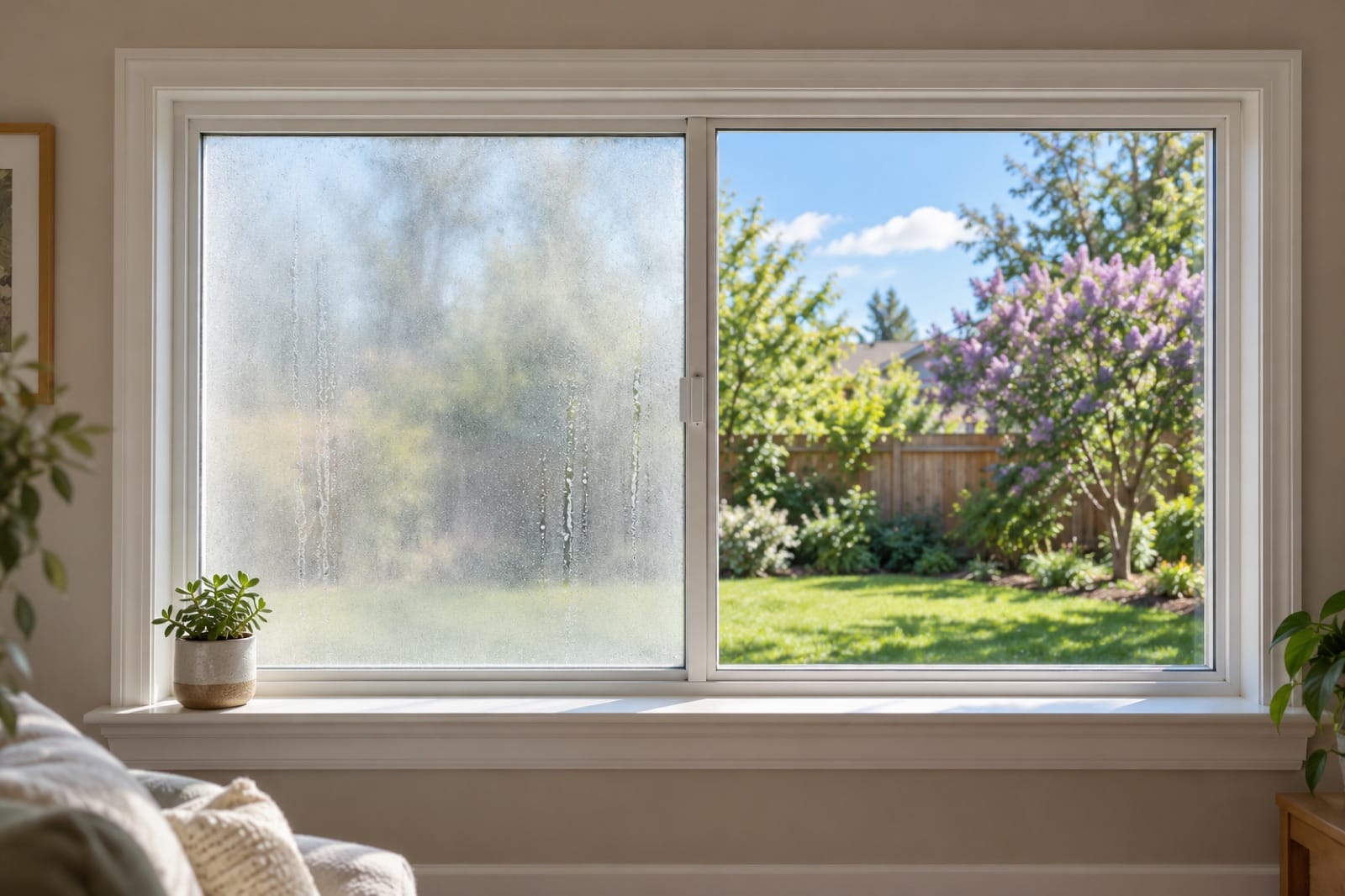
- Windows and doors. Outside air pushing through a gap shows as "fingers" spreading from the edge: under doors, along sliding door tracks, around window frames.
- The AC. The outlet of a mini-split should be evenly cold across the whole width, and central air vents should all feel and look about the same; warm stripes, patches or one weak vent are worth a service visit.
- Tape and note everything you'd want to fix: room, wall, what you saw.
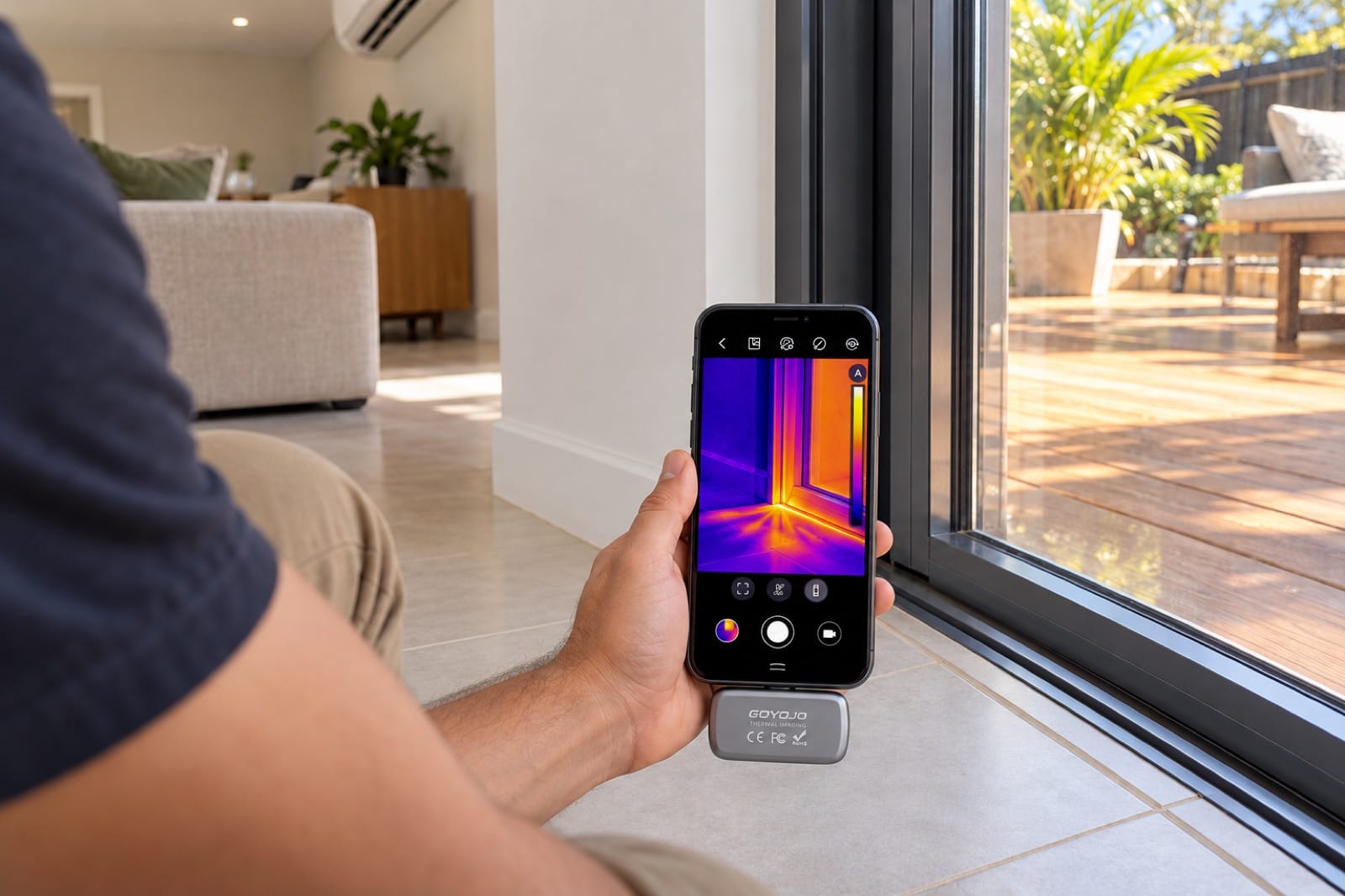
Illustration: with the AC on, hot outside air leaking under a sliding door shows up as warm fingers on the cool floor.
With Spark Pro you'll see a whole wall or a ceiling in one frame, so this round goes fast. Our guide to finding drafts and insulation gaps shows the patterns in detail.
Sunday morning: hot water, outside walls, roof and attic (1 hour)
- The water heater. Scan the pipe connections, and press Damp on the floor or the wall around its base. A constant drip from the relief valve drain is worth a call to a plumber.
- Outside walls at ground level. Walk around the house. Where garden beds, a patio or a downspout sit against the wall, measure the inside of that wall with Damp at baseboard height. Our guide to damp and mold explains what high readings there usually mean.
- The roof, from the ground. Look for missing or lifted shingles and sagging gutters. If you already have a stain on a ceiling, see our guide to tracing a roof leak from inside.
- The attic, if you can get in safely and it's still cool. Step only on the joists or boards, not on the insulation between them. Look for wet wood or stained insulation under the roof deck, crushed insulation and loose ducts.
Sunday midday: look inside (1 hour)
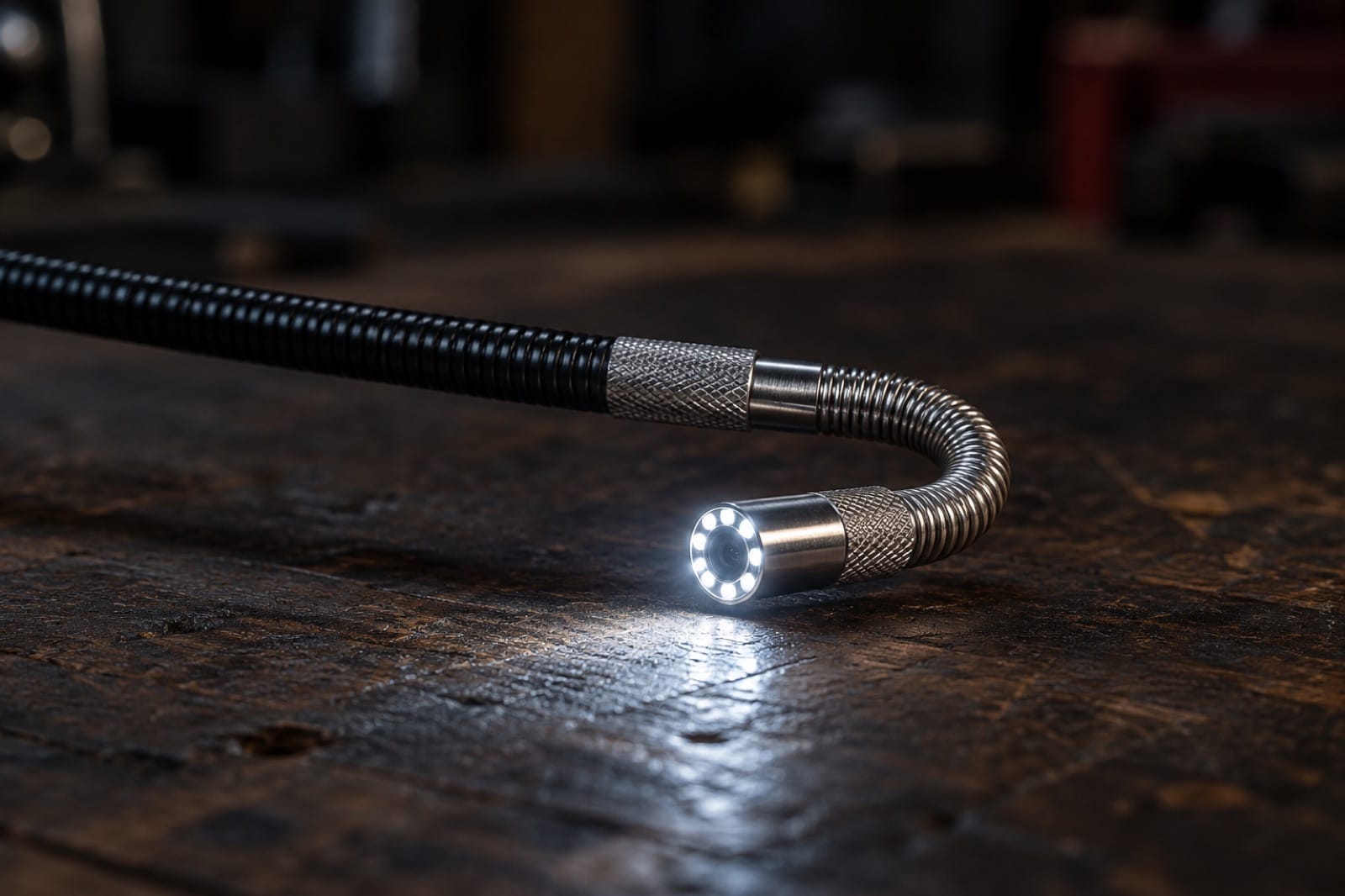
This is where Reach 360 comes in: a 6.2 mm camera tip on a 1 m semi-rigid cable that bends up to 180° each way, with your phone clipped on the handle as the screen.
- Under the dishwasher. Pop off the toe kick under the countertop and slide the tip in. A slow drip from the hose connection can soak the floor for months before anyone sees it.
- Behind the vanity and the kitchen sink. Look up and along the back of the cabinet, where the pipes go into the wall.
- Behind the washing machine valves and under the laundry tub.
- Any spot you taped on Saturday where you'd like to see more. Use an existing gap first; a small hole is a five-minute patch. Before you drill one, see our guide to checking a wall before you drill.
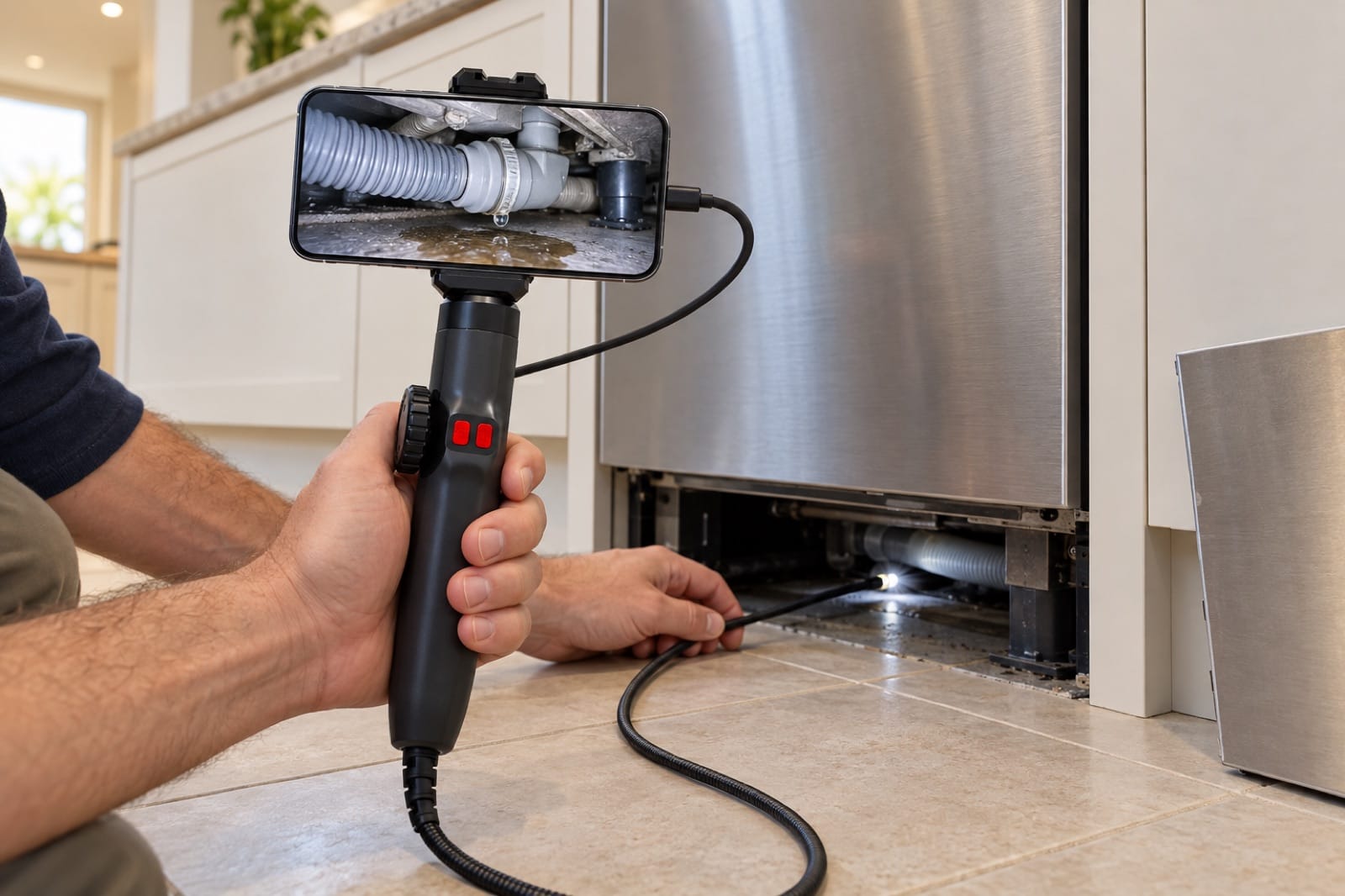
Illustration: pop off the toe kick and look underneath. A slow drip from a hose fitting can soak the floor for months unseen.
What should you do with what you find?
Go through your notebook on Sunday afternoon (30 minutes) and sort everything into three groups:
| Group | Examples | What to do |
|---|---|---|
| Fix now, yourself | Gap under a door, a loose sliding door seal, a shifted insulation batt, a power strip running warm | Seal, refit, replace |
| Call a pro | Wet wall that stays wet, warm circuit breaker, dripping water heater, a roof leak | Plumber, electrician, roofer: send them your photos |
| Watch | A slightly high moisture reading, a small warm spot | Measure again in a week or after the next storm |
Keep the thermal photos and readings. They turn one weekend into your own home maintenance checklist: next year, check the same spots and see what changed.
What are the most common mistakes?
- Scanning on a mild day. With little temperature difference between inside and outside, missing insulation and air leaks may simply not show.
- Treating every cool patch as a leak. It could be damp, a gap in the insulation or a reflection. Check it with Damp first. Our guide to reading a thermal image covers what fools beginners.
- Trusting one moisture number. Screws, pipes and other metal behind the surface can make a reading jump, so compare against a dry part of the same wall.
- Painting over the stain. Fresh paint hides the mark, not the cause.
What can't a DIY home inspection tell you?
- It doesn't see through walls. The thermal camera sees surface temperature; the moisture meter reads 5–40 mm deep; the inspection camera sees where you can get its tip.
- It doesn't find cables. Use a cable detector for that.
- It doesn't replace a licensed inspection when you're buying a house, or a pro when something is clearly wrong. It tells you where to look and gives the pro a head start.
What tools do you need for a DIY home inspection?
Each tool answers one question. Spark Pro answers "where?", Damp answers "is it wet?", and Reach 360 answers "what is it?". With only a thermal camera, every cool patch is a guess. With only a moisture meter, you'd have to test every inch of every wall. Together they take you from "something's off in this room" to "this joint behind the vanity drips". If you're starting with one, our comparison of thermal cameras, moisture meters and inspection cameras explains which problem needs which tool.
Frequently asked questions
How long does it take to inspect your own house?
Following this plan, about six hours of hands-on work over a Saturday and a Sunday. An apartment takes less, because there's no attic or outside wall to walk around, and a large older house takes longer. If a whole weekend is too much, the wet areas alone make a good first session.
How often should you check your home?
There's no fixed rule. Once a year is a sensible habit, and many homeowners add a quick look before the heating or cooling season starts. Check again after a big storm, a plumbing repair or any work in the attic. With last year's photos and readings saved, it's easy to see what has changed.
Should I inspect my own house before selling it?
It can help. You'll find the leaks, warm outlets and damp patches a buyer's inspector is likely to notice while you still have time to fix them or get quotes. It won't give you the written report a professional pre-listing inspection does, and it doesn't change what you're legally required to disclose, so check your local rules on that.
Is a DIY inspection enough when you're buying a house?
No. Use it to decide which houses are worth paying an inspector for and what to ask them to look at, but still book a licensed home inspection before you commit. An inspector checks things a weekend with three tools can't, such as the structure, the roof and the wiring, and you get a written report you can use when you negotiate.
The tools in this guide
Prices are on each product page, in your local currency.
- Spark Pro — thermal camera for USB-C phones, 256 × 192 thermal pixels, a whole wall in one frame.
- Damp — pinless moisture meter for drywall, plaster, concrete and wood, reads 5–40 mm deep.
- Reach 360 — steerable 6.2 mm inspection camera, tip bends up to 180° each way.
The Whole Home Kit puts all three together, 10% less than buying them separately.
Plan your weekend now. Order the Whole Home Kit and check the whole house before the weather does it for you.